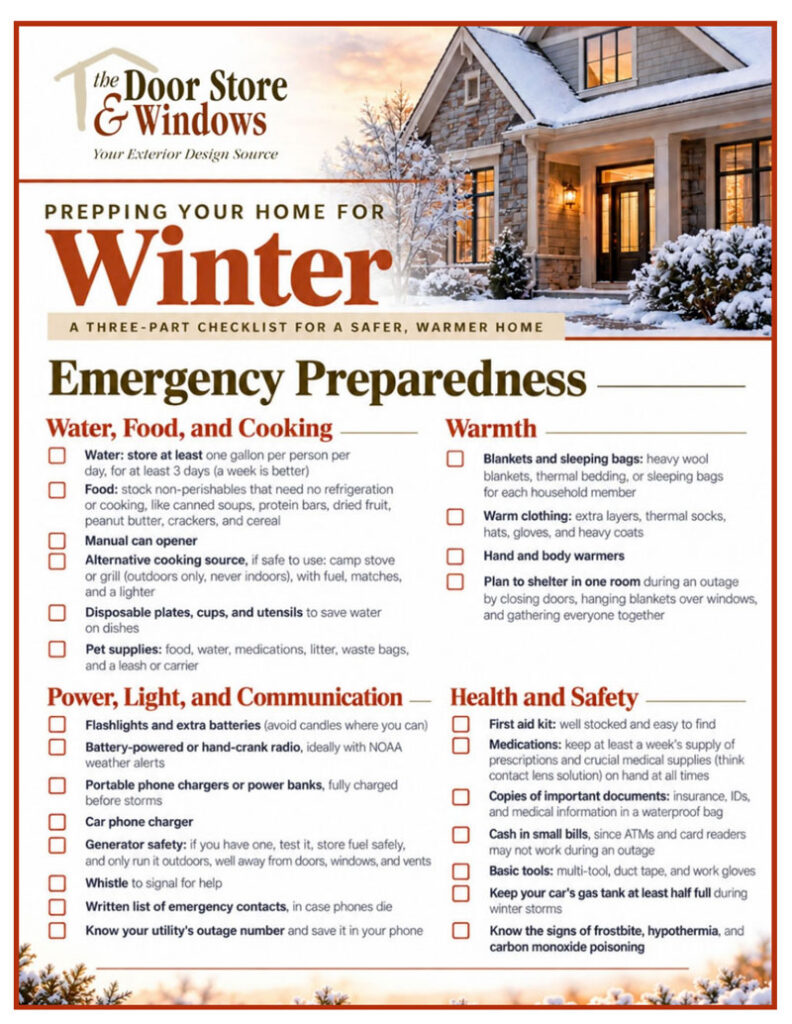



The Door Store and Windows wants to help you be prepared for the upcoming winter. Cold temperatures, snow, and ice can put a real strain on your home, and a little preparation now can save you from costly repairs and uncomfortable surprises later. We’ve put together three checklists covering the exterior of your home, the interior, and emergency preparedness, so you can tackle each area one step at a time. Whether you’re sealing drafts around your windows and doors, getting your heating system ready, or stocking up in case of a power outage, these lists will help you and your family stay safe, warm, and comfortable all season long. And you can learn more specific information about window prep by reading this blog.
1. Exterior
- Disconnect hoses: remove, drain, and store them
- Shut off outdoor water: close the indoor shut-off valve for exterior spigots, then open the outdoor faucet to drain any remaining water
- Install insulated faucet covers on outdoor spigots
- Drain and winterize irrigation system: have the lines blown out if you have sprinklers
- Clean gutters: clear leaves and debris to prevent ice dams
- Check downspouts: make sure they direct water at least 4-6 feet from the foundation
- Trim trees: cut back branches near the house, roof, or power lines, and remove any dead or weak limbs
- Check the roof: look for loose, cracked, or missing shingles and damaged flashing, and call a pro for questionable areas before snow makes them worse
- Inspect the chimney: schedule a sweep and inspection if you use a fireplace or wood stove
- Seal exterior gaps: caulk cracks around windows, doors, siding, and where pipes or wires enter the house
- Check the foundation and driveway: seal cracks so water can’t freeze and widen them
- Service outdoor equipment: drain gas from the lawn mower or run it dry, and tune up the snow blower (fresh fuel, spark plug, shear pins)
- Store or cover outdoor furniture, grills, and planters
- Stock traction and snow gear: snow shovel, ice scraper, and rock salt, kitty litter, or sand
- Mark the edges of your driveway and walkways with stakes so they’re easy to find under snow
- Check exterior lighting on steps, walkways, and entrances
- Winterize the garage: check the door seal and keep a shovel and salt near the door
- Prep your vehicles: winter tires or tire check, wiper blades, washer fluid, battery, antifreeze, and an emergency kit in the trunk
2. Interior
- Service your heating system: change the filter and have a professional inspect it
- Replace furnace filters regularly throughout the season (usually every 1-3 months)
- Test smoke and carbon monoxide detectors: replace batteries and check expiration dates (most units last 7-10 years)
- Check your fire extinguisher: confirm it’s charged and easy to reach
- Seal air leaks: add or replace worn weather stripping around windows and doors
- Add door sweeps or draft stoppers at the bottom of exterior doors
- Insulate windows: use window film, insulated curtains, or caulk gaps
- Lock windows: this action will pull the sashes or interlocks tightly together
- Check attic insulation and seal gaps around attic hatches and recessed lighting
- Reverse ceiling fans: set them to run clockwise on low to push warm air down
- Check exposed pipes: wrap any in unheated areas like crawl spaces, garages, and exterior walls
- Locate your main water shut-off valve and make sure everyone in the household knows where it is and how to use it
- Know your plan for extended absences: keep the heat at 55°F or above, and consider shutting off and draining the water if you’ll be away long
- Open cabinet doors under sinks on exterior walls during extreme cold to let warm air reach the pipes
- Drain and insulate the water heater, or flush sediment if it’s due
- Clean the dryer vent to reduce fire risk and improve efficiency
- Vacuum or dust radiators, baseboard heaters, and vents, and make sure furniture isn’t blocking them
- Bleed radiators if you have a hot-water system
- Program or test your thermostat and replace its batteries
- Check the fireplace damper and have firewood or fuel stocked and stored dry
- Confirm space heaters are in good condition, with working auto shut-off, and keep them 3 feet from anything flammable
3. Emergency Preparedness
Water, Food, and Cooking
- Water: store at least one gallon per person per day, for at least 3 days (a week is better)
- Food: stock non-perishables that need no refrigeration or cooking, like canned soups, protein bars, dried fruit, peanut butter, crackers, and cereal
- Manual can opener
- Alternative cooking source, if safe to use: camp stove or grill (outdoors only, never indoors), with fuel, matches, and a lighter
- Disposable plates, cups, and utensils to save water on dishes
- Pet supplies: food, water, medications, litter, waste bags, and a leash or carrier
Warmth
- Blankets and sleeping bags: heavy wool blankets, thermal bedding, or sleeping bags for each household member
- Warm clothing: extra layers, thermal socks, hats, gloves, and heavy coats
- Hand and body warmers
- Plan to shelter in one room during an outage by closing doors, hanging blankets over windows, and gathering everyone together
Power, Light, and Communication
- Flashlights and extra batteries (avoid candles where you can)
- Battery-powered or hand-crank radio, ideally with NOAA weather alerts
- Portable phone chargers or power banks, fully charged before storms
- Car phone charger
- Generator safety: if you have one, test it, store fuel safely, and only run it outdoors, well away from doors, windows, and vents
- Whistle to signal for help
- Written list of emergency contacts, in case phones die
- Know your utility’s outage number and save it in your phone
Health and Safety
- First aid kit: well stocked and easy to find
- Medications: keep at least a week’s supply of prescriptions and crucial medical supplies (think contact lens solution) on hand at all times
- Copies of important documents: insurance, IDs, and medical information in a waterproof bag
- Cash in small bills, since ATMs and card readers may not work during an outage
- Basic tools: multi-tool, duct tape, and work gloves
- Keep your car’s gas tank at least half full during winter storms
- Know the signs of frostbite, hypothermia, and carbon monoxide poisoning